



.png)

Recently, the "Joint Research Center for Industrial Embodied Intelligent Robots", co-established by Innovation New Materials Technology Co., Ltd. (hereinafter referred to as "Innovation New Materials") and Tsinghua University Shenzhen International Graduate School (hereinafter referred to as "Tsinghua SIGS"), was officially unveiled and established.The center will focus on the research and development of cutting-edge technologies for industrial embodied intelligent robots. Through a new model of university-enterprise cooperation, it will promote the innovation of key technologies in the field of intelligent manufacturing and their industrial application.Present at the unveiling ceremony were Liu Huiqin, Secretary of the Party Committee of Tsinghua SIGS; Liu Bilu, Vice Dean of Tsinghua SIGS; Xu Fangzhou, General Manager of the Overseas Business Department of Innovation New Materials; Ding Wenbo, Director of the Scientific Research Department of Tsinghua SIGS; Wang Xueqian, Secretary of the General Party Branch of the Institute of Data and Information of Tsinghua SIGS; Liu Houde, Director of the Joint Research Center for Industrial Embodied Intelligent Robots; and other relevant personnel.
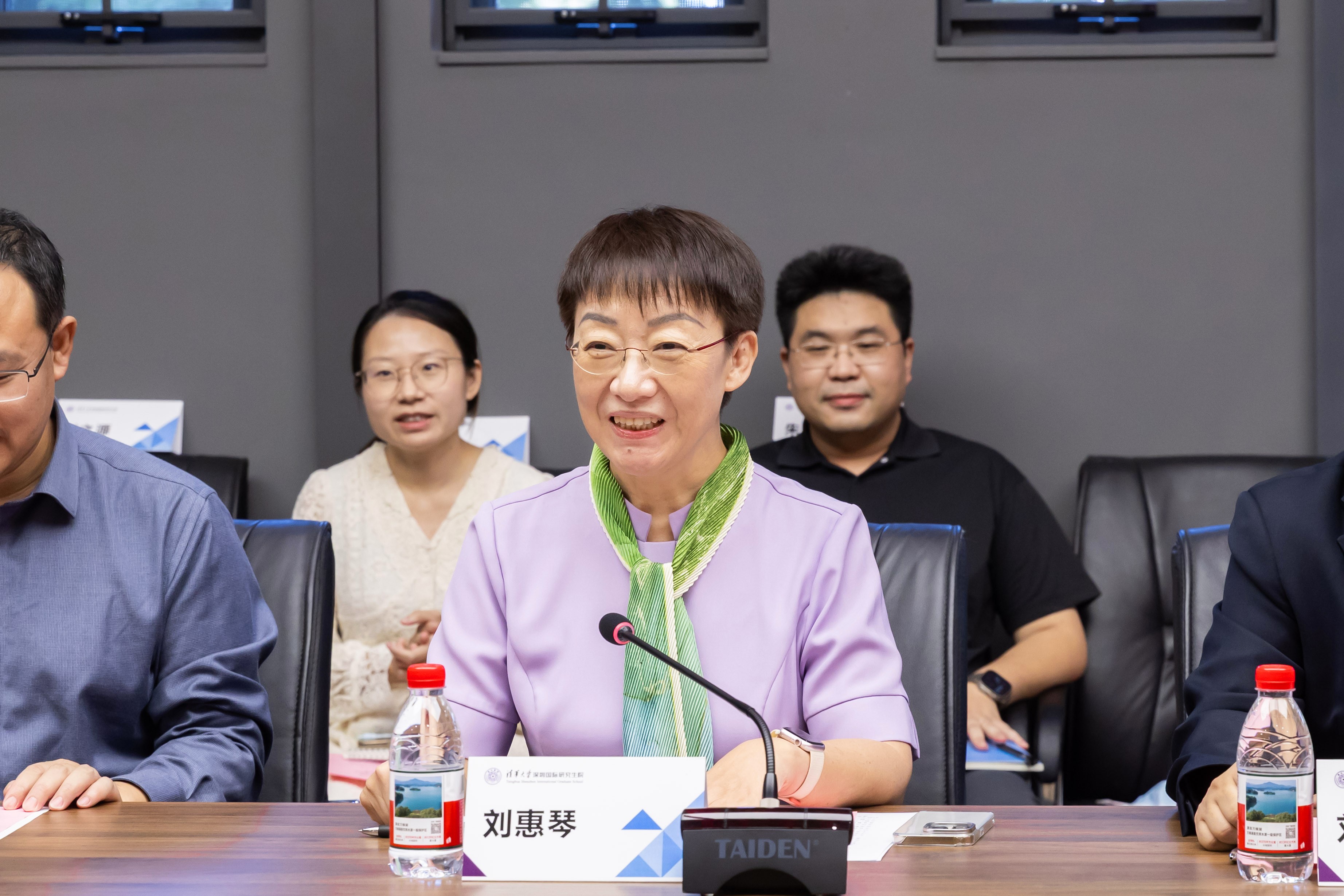
At the symposium, Liu Huiqin pointed out that China's manufacturing industry is ushering in a new wave of industrial development characterized by intelligence and embodiment. The establishment of the "Joint Research Center for Industrial Embodied Intelligent Robots" aims to tackle core technological challenges in the industry, enabling "intelligent craftsmen" equipped with "hands and feet", "eyes" and "brains" to enter workshops across various sectors at an early date and inject new impetus into the intelligent transformation of the manufacturing industry.Tsinghua SIGS has long been committed to building a highland for talent cultivation featuring in-depth integration of industry, academia, research and application. Relying on the collaborative chain of "university R&D + enterprise pilot-scale production + cluster mass production", the research center will accelerate the transformation of laboratory technologies into industrial applications, and strive to become an internationally influential source of innovation for industrial intelligent technologies and a base for talent cultivation.
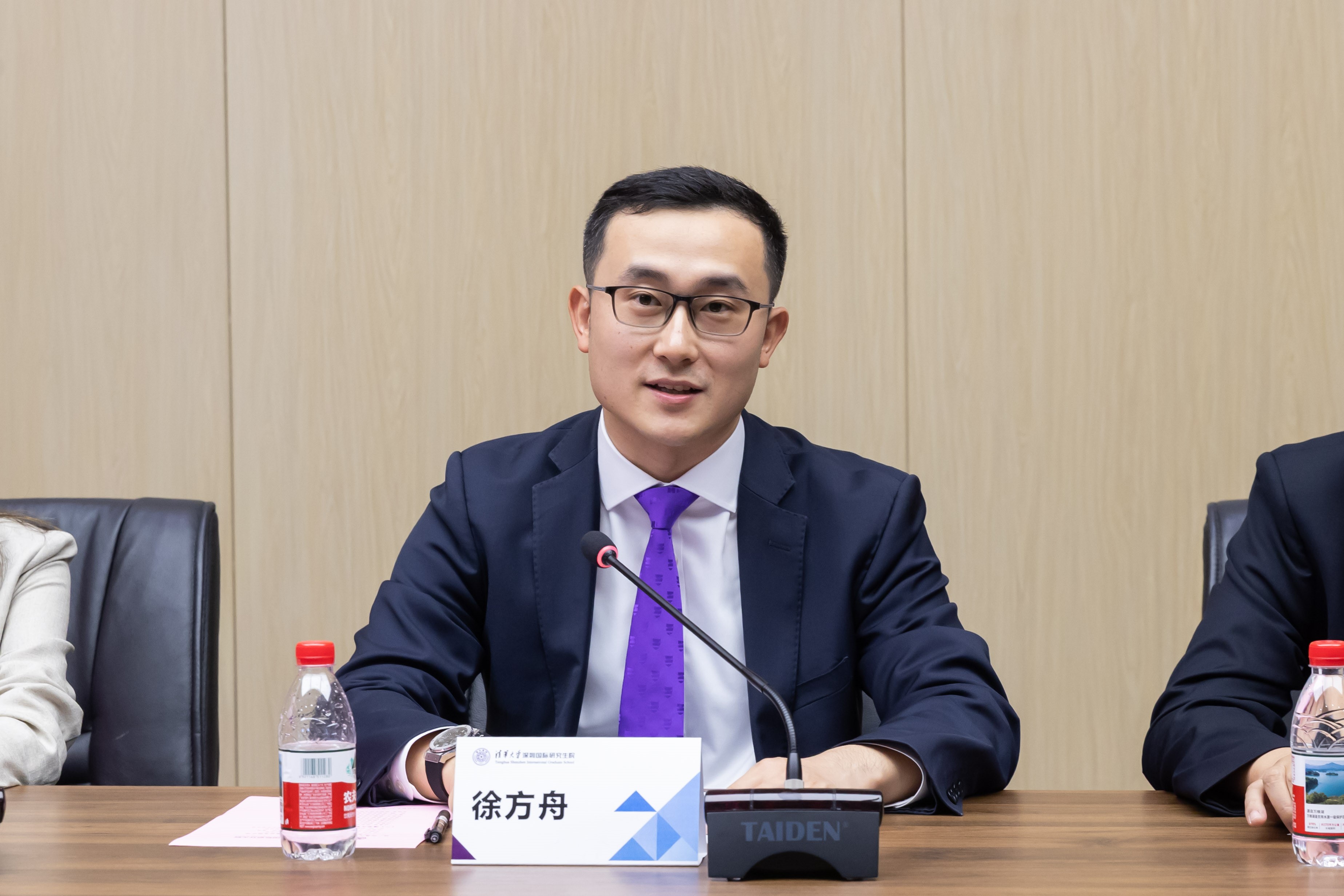
Xu Fangzhou stated that Innovation New Materials is transitioning from "aluminum manufacturing" to "robot manufacturing," which represents another practice of the company's vision of "Innovation Shapes the Future." In 2025, embodied intelligence was included in the government work report for the first time and listed as a key priority in the "14th Five-Year Plan." Aluminum alloy materials will play a crucial role in the development of embodied intelligence. He expressed confidence that by integrating Tsinghua University's technological strength, Tsinghua SIGS' capabilities in industry-academia-research collaboration, Shenzhen's advantages in industrial chains, and Innovation New Materials' accumulation in material manufacturing, the cooperation between the two parties will surely open up a new situation of win-win outcomes for all stakeholders.
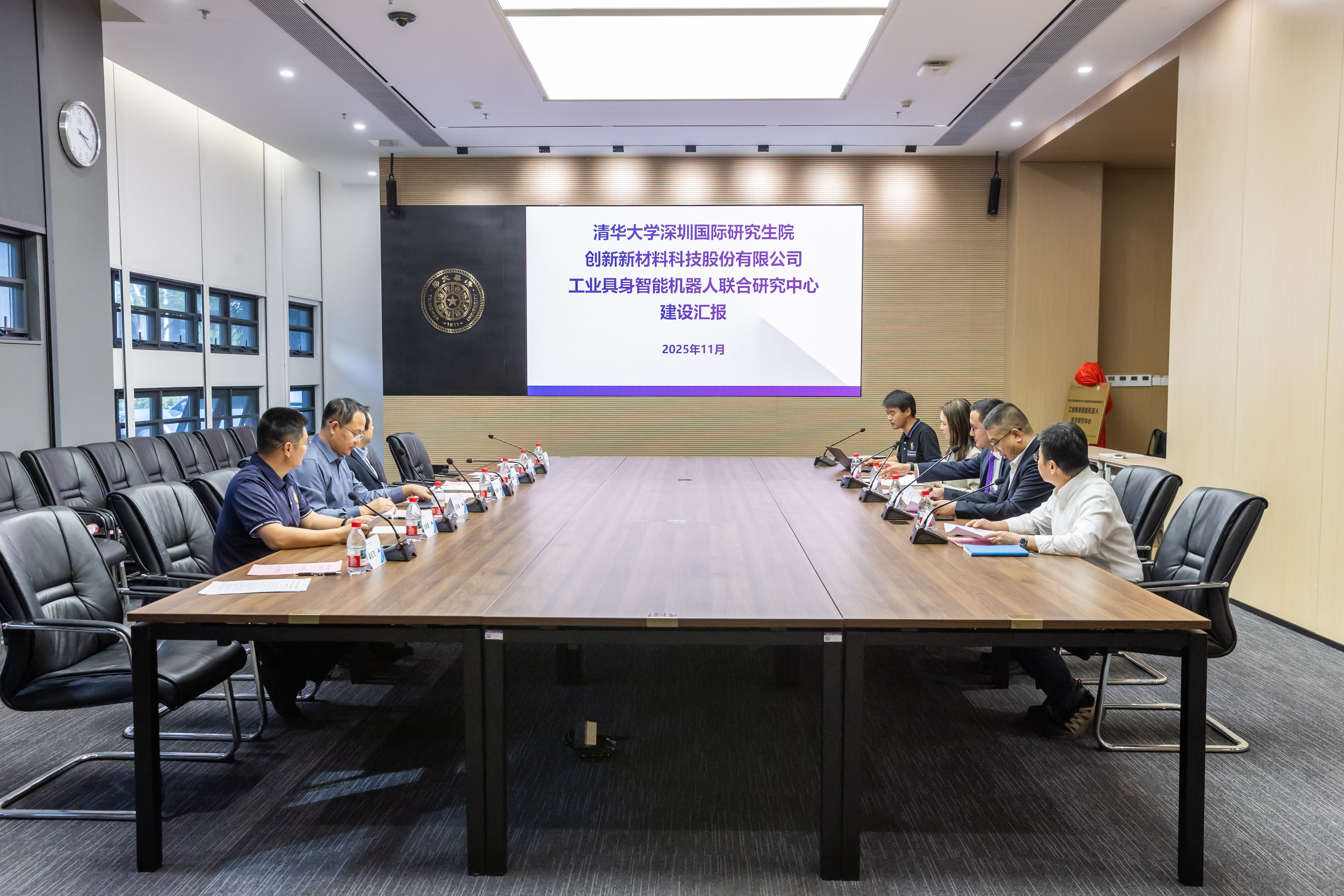
Liu Houde introduced the development plan of the research center. He stated that the center will focus on the strategic positioning of "reaching high and grounding solid": on the one hand, it is committed to exploring the "no-man's land" of basic theories and core algorithms in embodied intelligence to achieve original breakthroughs; on the other hand, it will closely connect with the production line processes of Innovation New Materials, solve practical pain points in the manufacturing industry, and promote the efficient transformation of scientific research achievements. At the same time, the center will strive to build an interdisciplinary talent cultivation platform and foster compound leading talents who are proficient in both artificial intelligence and industry.
It is reported that the Joint Research Center will rely on Tsinghua SIGS' profound scientific research accumulation in the field of intelligent robots, combine Innovation New Materials' rich experience in material technology and industrial applications, and focus on tackling key core technologies of industrial embodied intelligent robots. Its research directions cover key fields such as innovative design of intelligent robots, embodied dexterous manipulation, and embodied navigation and control.
The Joint Research Center will be committed to solving practical problems in industrial sites, building a complete ecosystem from R&D to application, accelerating the transformation of scientific and technological achievements, and striving to develop into an internationally influential source of innovation for industrial intelligent technologies, a demonstration zone for achievement transformation, and a gathering area for high-end talents. It will provide core support for China to seize the commanding heights of science and technology and build new industrial advantages in the global competition of intelligent manufacturing.
After the unveiling ceremony, the Joint Research Center held its first Management Committee meeting. At the meeting, the Charter of the Research Center was reviewed and approved, and the development plan as well as the annual work objectives were discussed. This marks the official operation of the Research Center.


