


.png)

Reposted from China Nonferrous Metals News
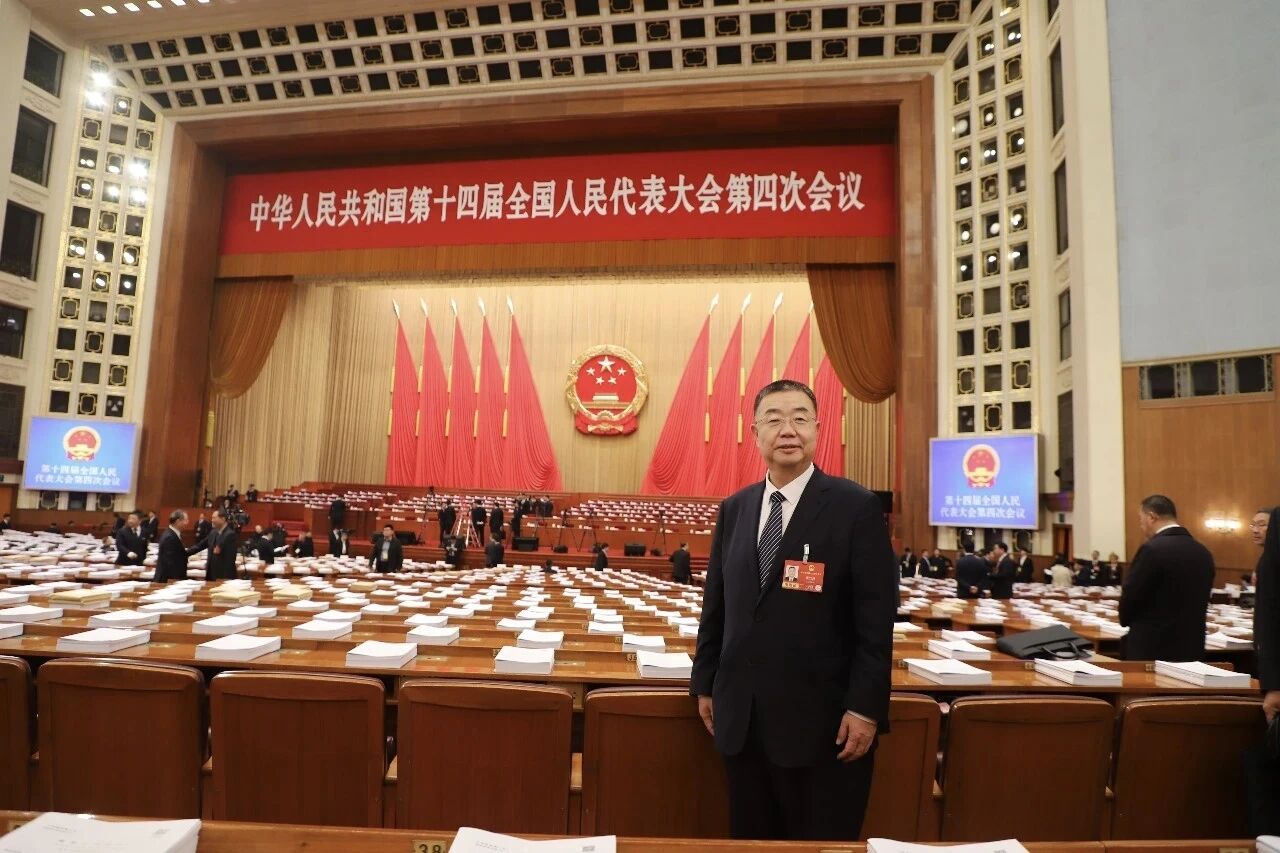
During the Two Sessions of the National People’s Congress and the Chinese People’s Political Consultative Conference, Cui Lixin, a deputy to the National People’s Congress and Chairman of Shandong Innovation Group, focused on the pain points in the comprehensive utilization of bulk solid wastes such as red mud and the construction of a “Waste-Free City” in Binzhou, Shandong Province. He put forward targeted suggestions, pointing out the direction for Binzhou to solve solid waste disposal problems and promote green development. These proposals also provide local practical ideas for the resource utilization of bulk solid wastes across the country.
Deputy to the National People's Congress, Chairman of Shandong Innovation Group Co., Ltd., Cui Lixin
As a major industrial city, Binzhou ranks among the top in Shandong Province in terms of the volume of bulk solid waste generated, placing significant pressure on its comprehensive utilization and disposal.Data shows that in 2024, the declared volume of general industrial solid waste generated in Binzhou was 48.9534 million tons, accounting for approximately 17% of the total in Shandong Province. Among this, 27.7452 million tons was red mud, with only 4.3516 million tons utilized and disposed of, and a stockpile of 23.3936 million tons.Nearly 50% of the general industrial solid waste produced in Binzhou each year—more than 20 million tons—is stockpiled in yards without being utilized or disposed of. Red mud, in particular, presents a global technical challenge for large-scale comprehensive utilization, and a replicable utilization system has not yet been fully established.By the end of May 2025, the stockpile of red mud in Binzhou reached 269 million tons. Solid waste management has become a key task for Binzhou’s green development.
The research finds that the comprehensive utilization of bulk industrial solid waste in Binzhou currently faces multiple practical difficulties.First, there is a lack of specific policies and regulations for comprehensive utilization and disposal, along with many obstacles in approval procedures, making it difficult to expand utilization and consumption channels.Second, support and guarantee policies are seriously insufficient. Bulk solid waste is not included in the scope of environmental tax collection, so enterprises lack pressure for governance. Meanwhile, the country also lacks incentive policies such as tax preferences, resulting in low enthusiasm for R&D and production among scientific research and production entities, and weak scientific and technological support.Third, the standard system urgently needs improvement. There are no quality standards for resource-based products, the public holds prejudices against recycled raw material products, and market acceptance is low. In addition, the relatively high price of recycled raw materials and the absence of mandatory usage regulations make it hard to raise enterprises’ initiative in utilization.
To address the above-mentioned challenges, accelerate the comprehensive utilization of bulk solid waste such as red mud, and further advance the high-standard development of a "Zero-waste City" in Binzhou, Cui Lixin put forward specific work suggestions in three aspects.
First, establish a basic information database and carry out special investigations of bulk solid waste.Conduct special investigations and rectification of typical bulk solid waste to find out the types, storage sites and stockpiles, classify them, and formulate rectification measures under the principle of “one policy for each site”.Comprehensively verify the basic conditions of typical bulk industrial solid waste storage sites in Shandong Province and set up a basic information database.
Second, improve the management system and promote the development of the standard system.Strengthen the development of a comprehensive utilization standard system, and formulate standards for the comprehensive utilization of red mud and titanium gypsum, as well as environmental management standards for large-scale consumption;improve the technical specifications for pollutant discharge permits, clarify the utilization and disposal destinations of solid waste in different industries, and optimize the content of pollutant discharge permits;include waste-generating enterprises in the information-based management platform, promote the construction of an IoT supervision system, and urge enterprises to implement the pollutant discharge permit system in a standardized manner.
Third, strengthen policy guidance and promote refined management.Refine environmental protection standards for the storage and disposal of bulk solid waste, strengthen the collection and administration of environmental protection tax on solid waste, and encourage enterprises to give priority to comprehensive utilization.Expand funding channels, guide financial institutions to support solid waste resource utilization projects, and attract social investment in scientific and technological research and development.Leverage new quality productive forces to promote resource recycling, support the coordinated efforts of carbon reduction and pollution reduction, and empower the development of a "Zero-waste City" in Binzhou and the construction of a Beautiful China.


